
Salt Cathedral price, tickets, hours and how to get to Zipaquirá in 2026
What we will tell you here about the Salt Cathedral of Zipaquirá
Here I will tell you firsthand about my experience visiting the Salt Cathedral of Zipaquirá. I will give you information on how to get to the Salt Cathedral, the entrance fee to the Salt Cathedral Zipaquirá, and where to buy your tickets, plus you will discover its main features.
Buying tickets to the Salt Cathedral and planning your trip to Zipaquirá
I had heard about the Salt Cathedral of Zipaquirá for a long time, also called “the first wonder of Colombia.” Some friends had told me about their experiences there and how majestic the Cathedral is inside. So my interest in visiting this place had existed for some time, but I had not had the opportunity to see it yet.
Until the opportunity arose; I had to travel to Bogotá for work and had a free day, so the first thing I thought of was to visit the Salt Cathedral. I did what I always do before traveling or visiting new places: googling all the possible information to plan my trips correctly.
Where to buy tickets to the Salt Cathedral and its Price
To buy tickets through an official site, I recommend you do it here: official tickets to the Salt Cathedral of Zipaquirá. The price of tickets to the Salt Cathedral 2026 starts from $75,000 COP for adults in the Basic rate and $60,000 COP for children and Colombian seniors. Foreign adults pay $125,000 COP and foreign children $110,000 COP.
Hours of the Salt Cathedral of Zipaquirá and its duration
The hours of the Salt Cathedral of Zipaquirá are from 9:00 a.m. to 5:40 p.m., every day of the week. The approximate duration of the visit to the Salt Cathedral is 3 hours.
How to get to the Salt Cathedral of Zipaquirá from Bogotá in 2026
There are three basic ways to get to the Salt Cathedral: private vehicle, public transport, or train. Here I detail their prices and times. Additionally, I will talk in depth about my experience traveling by public transport, which is the cheapest way to go to the Cathedral.
Traveling by private vehicle from Bogotá to Zipaquirá
The estimated time from Bogotá to Zipaquirá is approximately 50 minutes. On the way, you must pay a toll of $15,400.
Traveling by public transport from Bogotá to Zipaquirá, the most economical way to get there
This was the mode of transport I chose to make the trip to the Cathedral. The first thing I did was take a TransMilenio bus, the mass transport that exists in the city, from a station near my accommodation. The price of the TransMilenio ticket in 2026 is $3,550 COP, and you must buy or have a TransMilenio card whose price is $8,000 pesos; this only needs to be purchased once and can be recharged as many times as necessary. If you want more information about TransMilenio routes and stations click here.
Next, I took a route that took me to the Terminal Norte Station, located on the northern highway, taking approximately 55 minutes from downtown Bogotá. Once I arrived at that station, I walked to the Northern Transport Terminal, going up the pedestrian bridge.
Intermunicipal buses to Zipaquirá are boarded directly from the street, not at the terminal, so I walked a little further along the northern highway, for a block or two more, to wait for any bus that had the name “ZIPA” written on the front. There are some bus companies that make this route; in my case, I took a bus from the Cootranszipa company. The bus fare from Bogotá to Zipaquirá in 2026 is $10,500 COP, and we took about 45 minutes to arrive, as the traffic was smooth that day.
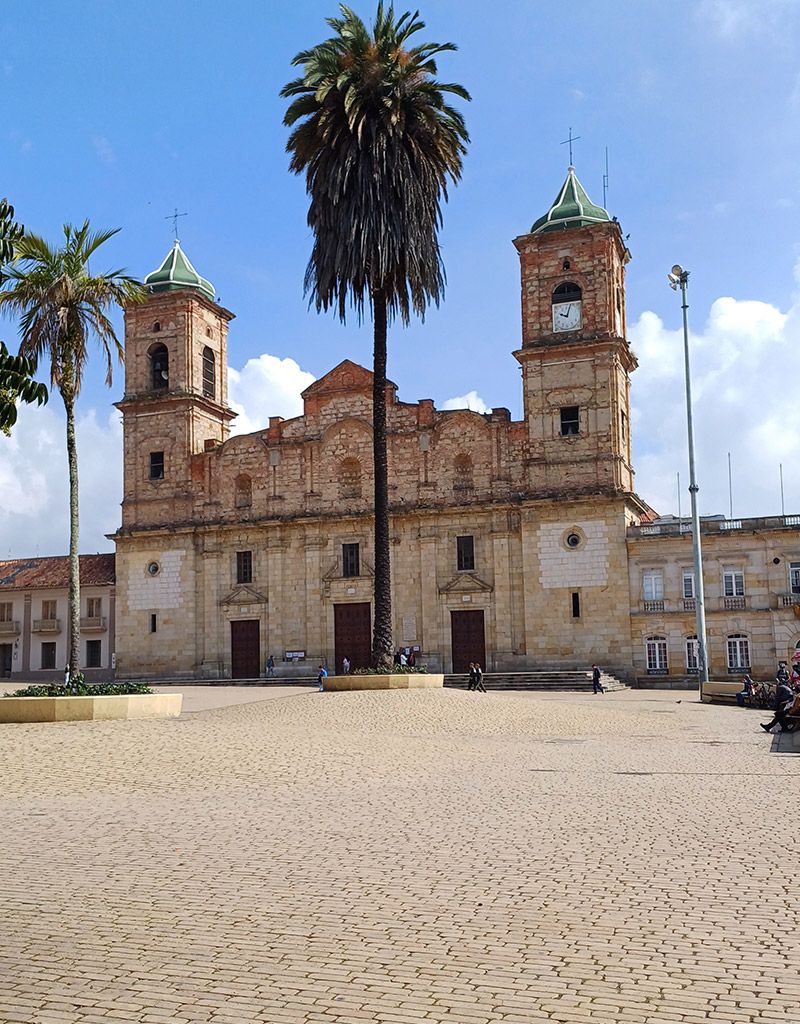
I told the driver's assistant that I was heading to the Salt Cathedral, and he kindly indicated that he would let me know when we passed the closest point of the bus route to the Cathedral. I got off right next to Parque La Esperanza, at Calle 4 with Carrera 16 in Zipaquirá. From this park, I continued on foot in a northwestern direction, on a route that I could call very picturesque, passing by the old train station of the municipality, the colonial-style Plaza de Zipaquirá, similar to those found in many towns and cities in South America. The path went through several pedestrian streets, and I was accompanied at all times by a good number of friendly tourists and locals.
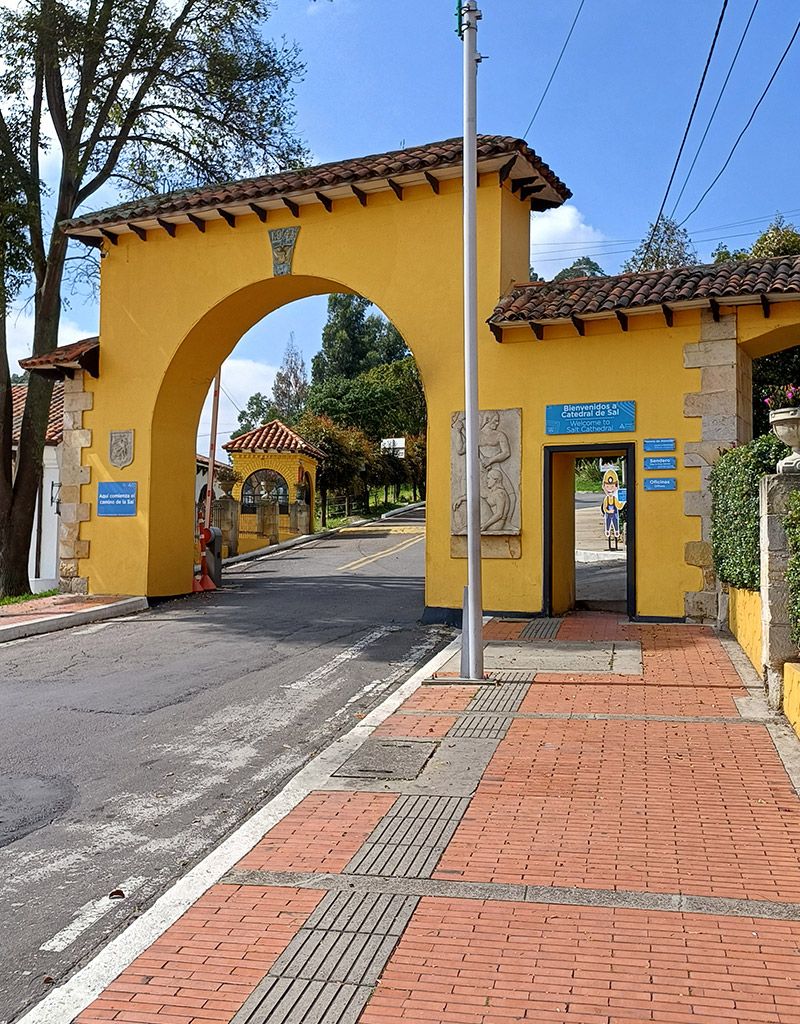
I continued along the same street and turned left onto Carrera 6, where I continued straight until I reached the entrance of Parque de La Sal. It took me about 15 minutes, but it was a smooth walk with a beautiful view of the streets of Zipaquirá.
Traveling by train from Bogotá to Zipaquirá
An interesting alternative to get to the Salt Cathedral in Zipaquirá is to travel by train, with a price of $107,500 COP for adults and $100,800 COP for children and seniors. I did not have the opportunity to travel on this train, but if you want more information about the train from Bogotá to Zipaquirá, click here. Keep in mind that the tourist train only operates on Saturdays, Sundays, and holidays.
Exploring the Salt Cathedral of Zipaquirá
Before entering the Mine
From the entrance of Parque de la Sal, we have an ecological path that goes up, made of slabs and stairs with a white line painted in the middle of the path and some signs indicating that we should follow that line to reach the entrance to the Mine. It is a path full of nature, with lush pines and tall eucalyptus trees accompanying us on the way up.
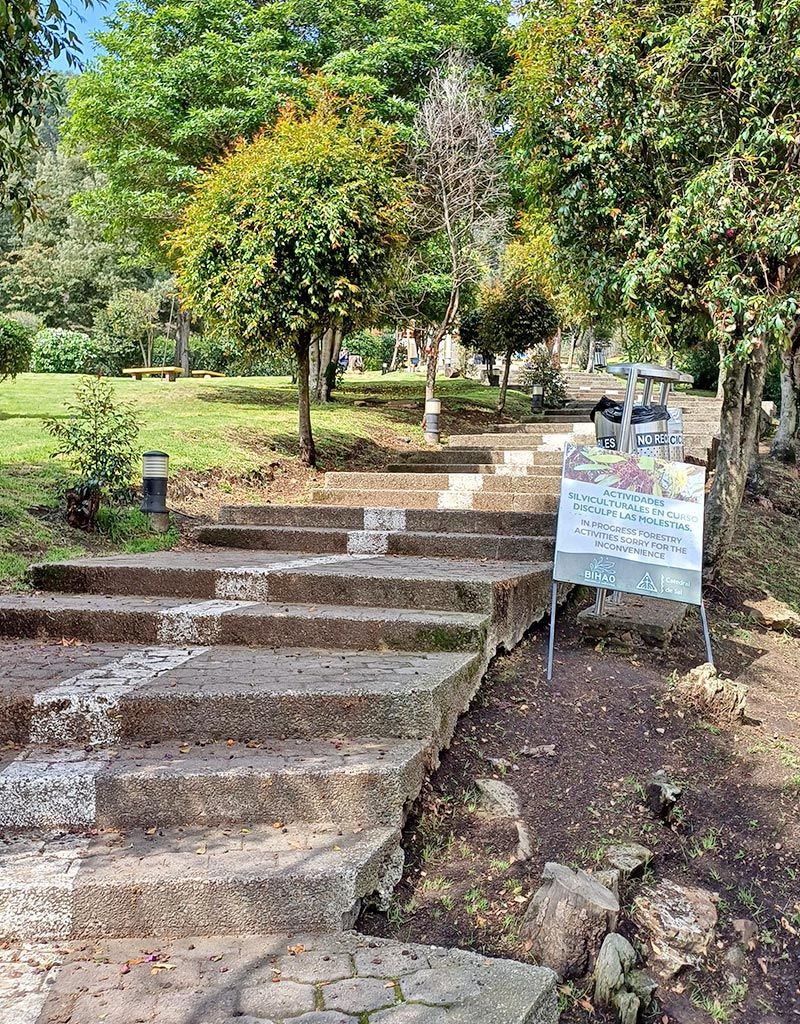
While climbing, I also noticed that there is a road for vehicles that reaches where the ticket offices and the entrance to the Mine are located, and there are also parking lots for visitors.
When I reached the top, at the end of the path, I could see a beautiful landscape, where mountains can be seen in the distance and the beautiful town of Zipaquirá below to the left. At the top is the Salt Cathedral complex itself, the ticket offices, lockers for storing luggage, the entrance to the mine, the statue of the miner, a dump truck used in the old mine, and one of the tallest climbing walls in Colombia in the open air. There are also some souvenir, food, and beverage shops. Many tourists were taking photos, taking advantage of the scenery of this site.
Beginning of the tour, entering the mine
The entrance to the mine consists of a long tunnel with a slight slope; the truth is that from there you would not imagine how small you will feel further down. It is important to indicate that at the entrance you can ask for the WIFI password from the staff or later from your guide, so you can have internet connection once you enter, because inside the mine mobile data does not work.
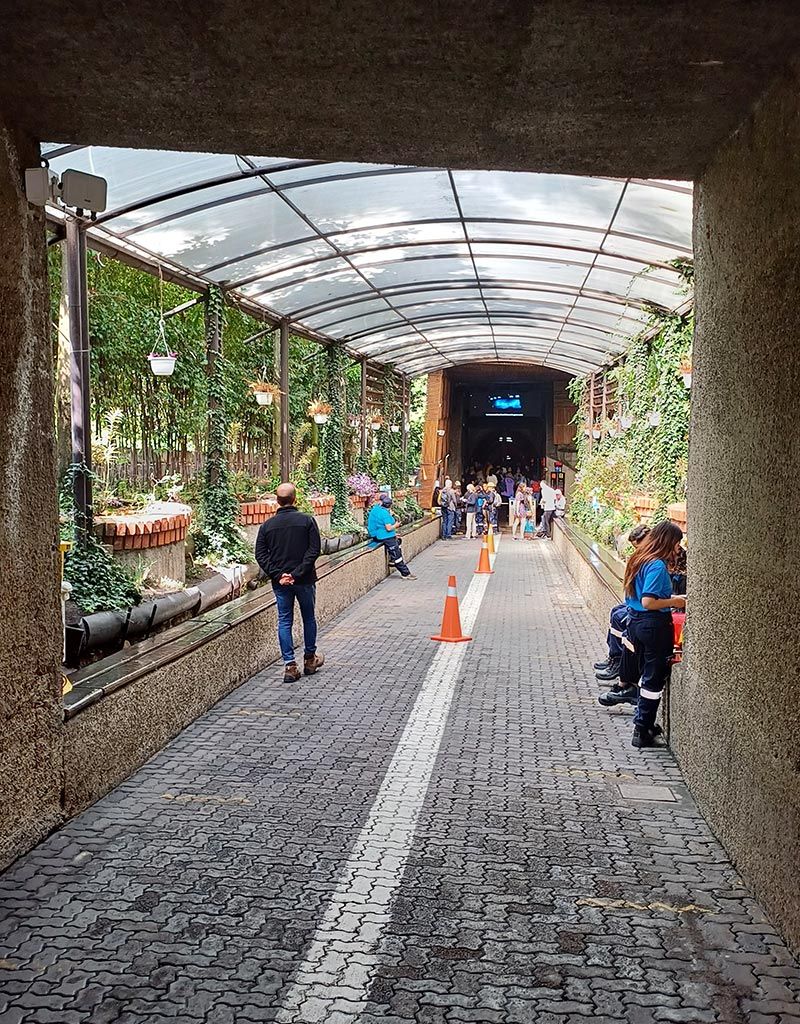
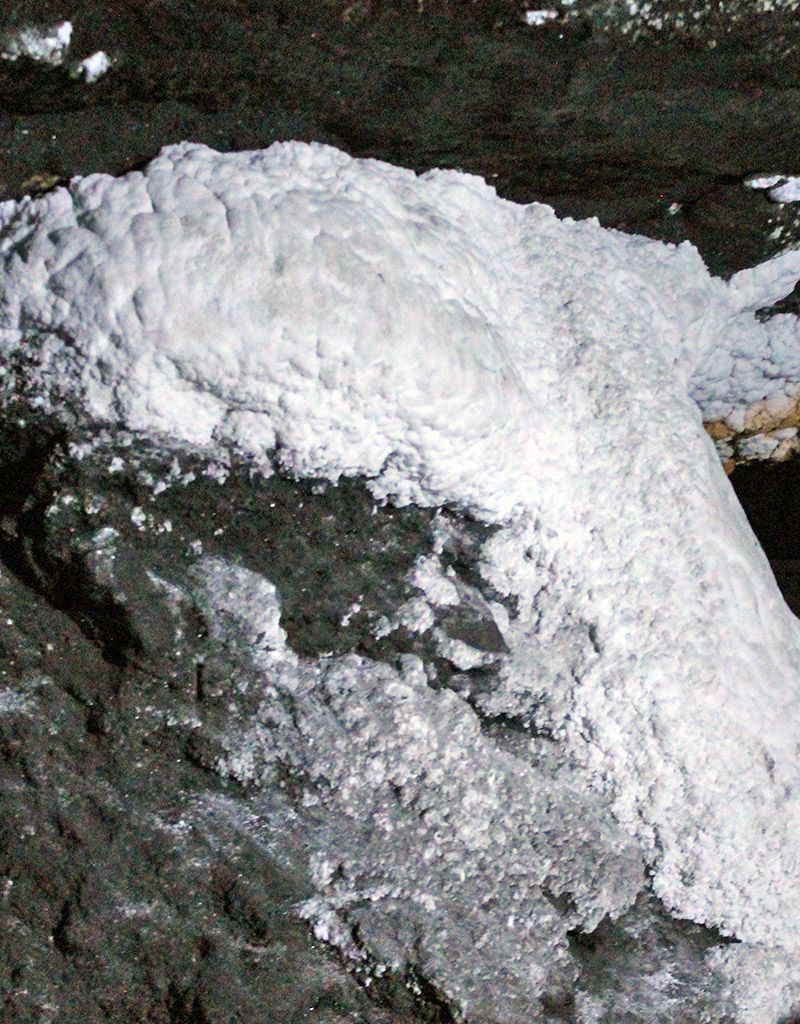
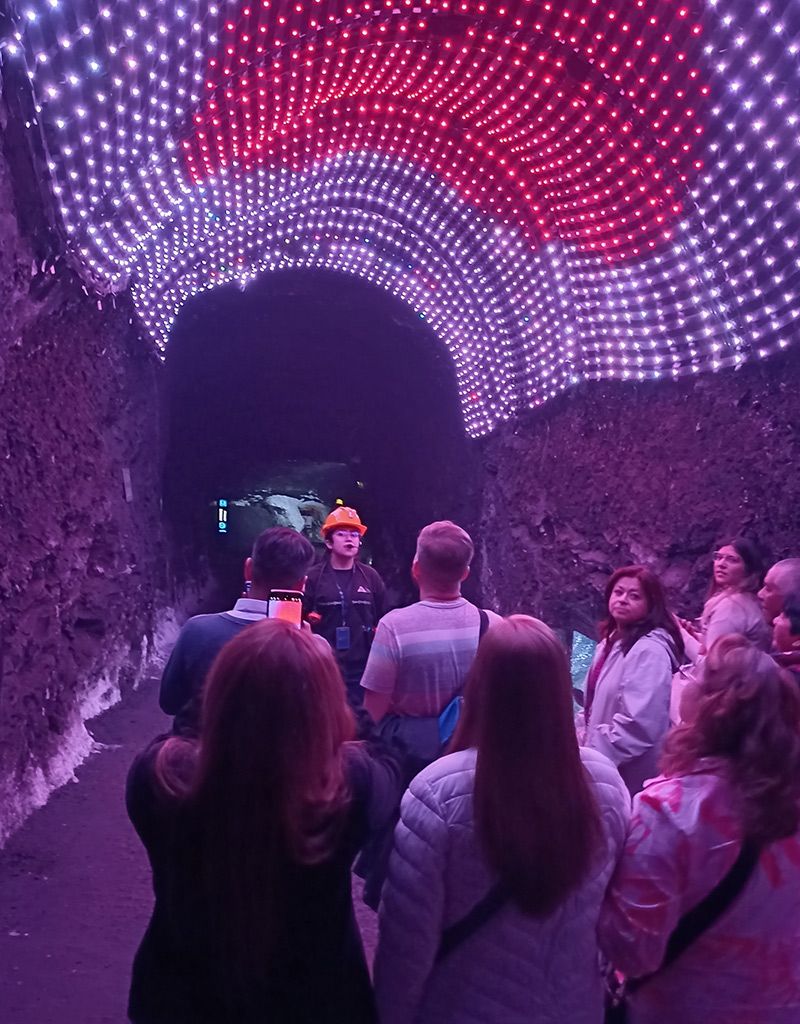
We went down in small groups accompanied by a cheerful guide, who told us everything about the Cathedral. As we descended through the initial tunnel, she showed us how to detect where there are water or humidity leaks, and it was because white layers similar to snow formed on the walls. Likewise, we passed under some of these formations and noticed that they dripped from time to time. The guide told us, as a secret, that it was believed that those who were hit by these salty drops would have a lot of luck. For my part, I did not feel at that moment that any drop fell on me; I thought that maybe later, when I returned to leave, I would try again to see if a drop would fall on me.
Continuation of the tour, Via Crucis
This place is also known for being an important site for religious tourism in Colombia and for housing one of the few underground cathedrals in the world. During the first stage, we visited 14 stations of the underground Via Crucis, which has a length of 386 meters. At one of its first stations, I could smell sulfur, something that the guide explained was common in that part of the tour and in mines like this.
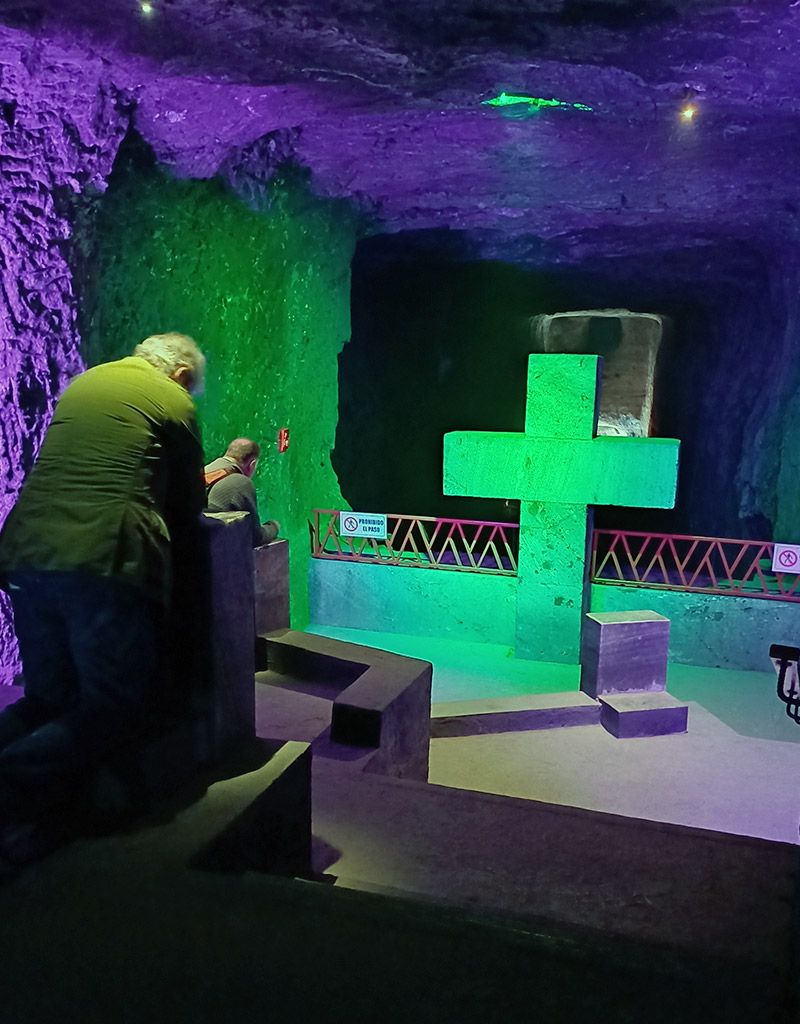
The stations have dim lighting, crosses, and structures carved from huge blocks of salt, creating an atmosphere that truly invites reflection. During the tour, each stage was narrated by the guide, explaining what each of the stations of Christ's Via Crucis consisted of, artistically represented in the ambiance and decoration of each point.
In the middle of the path, between stations, they showed us some quite steep stairs that descended from there to the bottom of the mine. The guide pointed out those stairs, indicating that they were the shortest way to go back up and exit the mine. She told us that they were exclusively for going up due to their height, and that anyone who could climb them completely without getting tired was a sign of being someone with a pure heart and without sins.
Continuation of the tour, dome
Continuing with our tour, we saw many tools such as phones or lights that are strategically placed along the way for emergencies. After finishing the Via Crucis, we arrived at a large dome. The guide explained to us that it was carved by 7 miners, that it has a height of 8 meters and a diameter of 11 meters. When you look at it closely, it can resemble a planet, seen from a satellite, a quite interesting view that sparks the imagination.
Continuation of the tour, Nártex
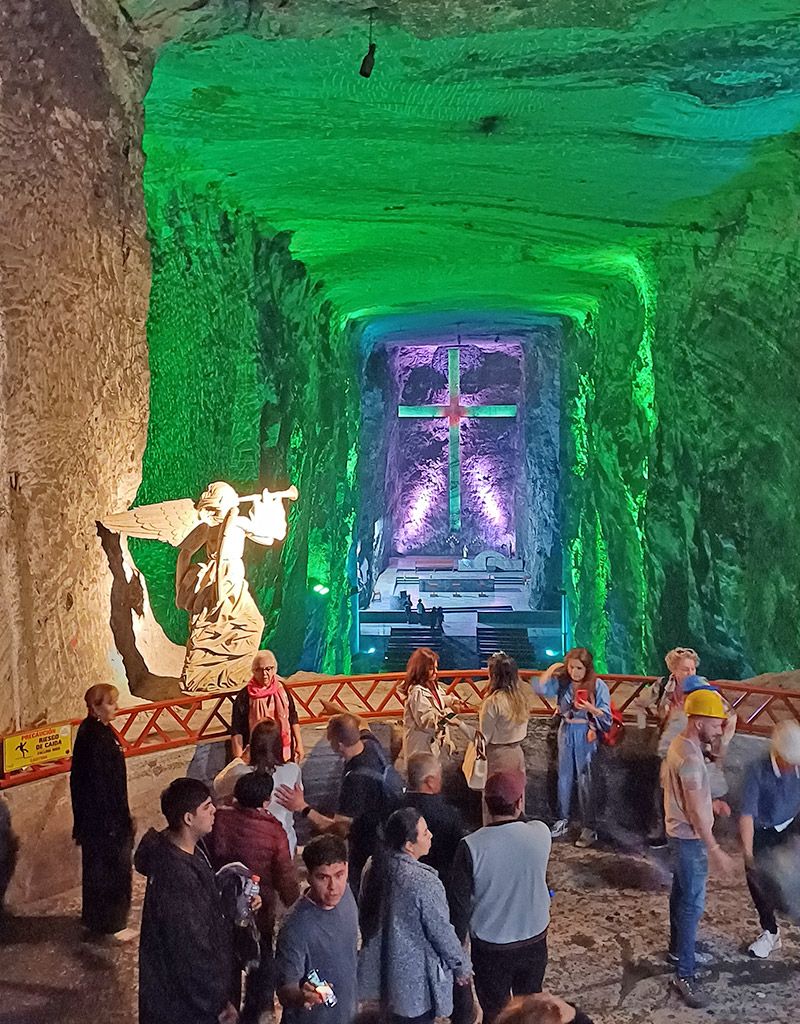
Our tour continued through the space called Nártex; this place precedes the Naves. It is a work composed of a series of geometric figures carved in salt, recreating a labyrinth through which, according to biblical history, the unbaptized had to pass as an act of penance with three stairways that descend and reach the same place. At the top of this place, we observed an illuminated sculpture of Archangel Michael.
Continuation of the tour, Naves
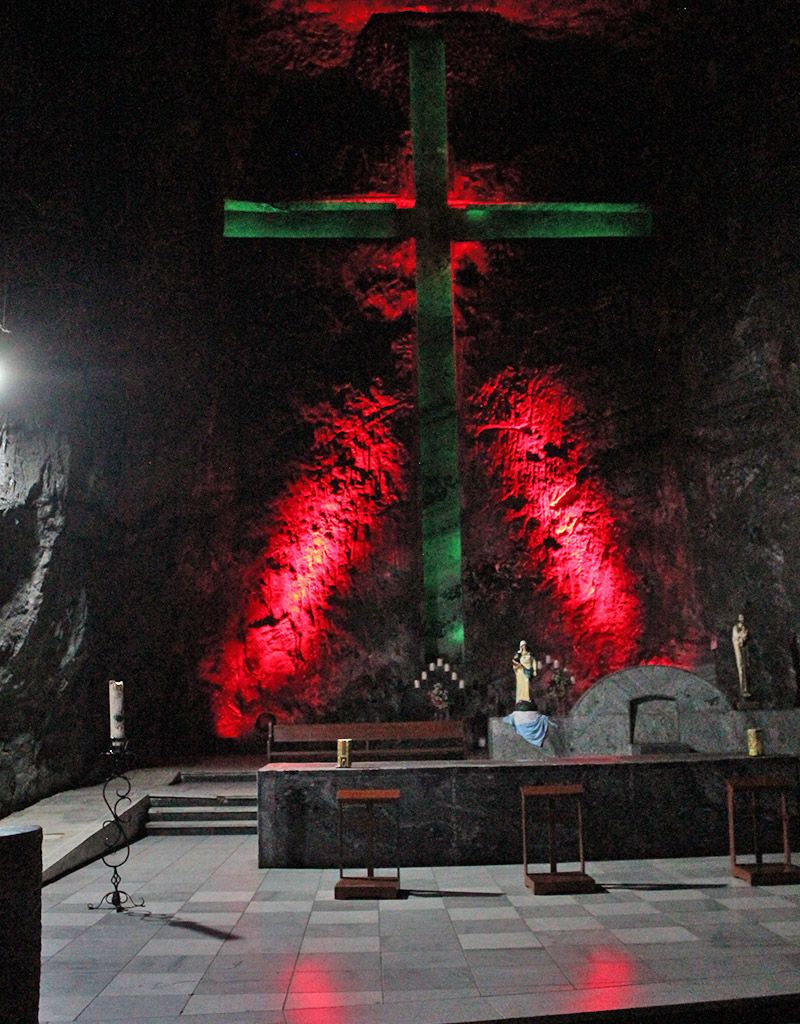
In the deepest part of the mine, at a depth of 180 meters, we found the so-called naves; these are huge vaulted structures where you feel like a small ant, and they are undoubtedly imposing. In addition, they have altars, giant crosses, and a true underground cathedral where masses and other Catholic ceremonies are held. The naves are: Nave of Birth, Nave of Life, and Nave of Death and Resurrection. It is worth mentioning that in the naves there are some professional photography points where you can pay an additional fee and take home some good physical photos.
Continuation of the tour, Central Nave, additional activities
As we continued on our way, we reached the Central Nave; here you will find different activities, a quite striking three-story underground restaurant, gift shops, and restrooms. Additionally, you can take stunning photos at the “Mirror of Water”: a place where there is something like a small lake, whose water is made of brine, which along with the light creates a mirror effect in which the saline rock is reflected, generating a truly striking visual depth effect, incredible for photographs.
Among the activities we can do is Mapping: a projection on the walls in the form of a light show that takes place in one of its naves, lasting 30 minutes and projected at different times throughout the day.
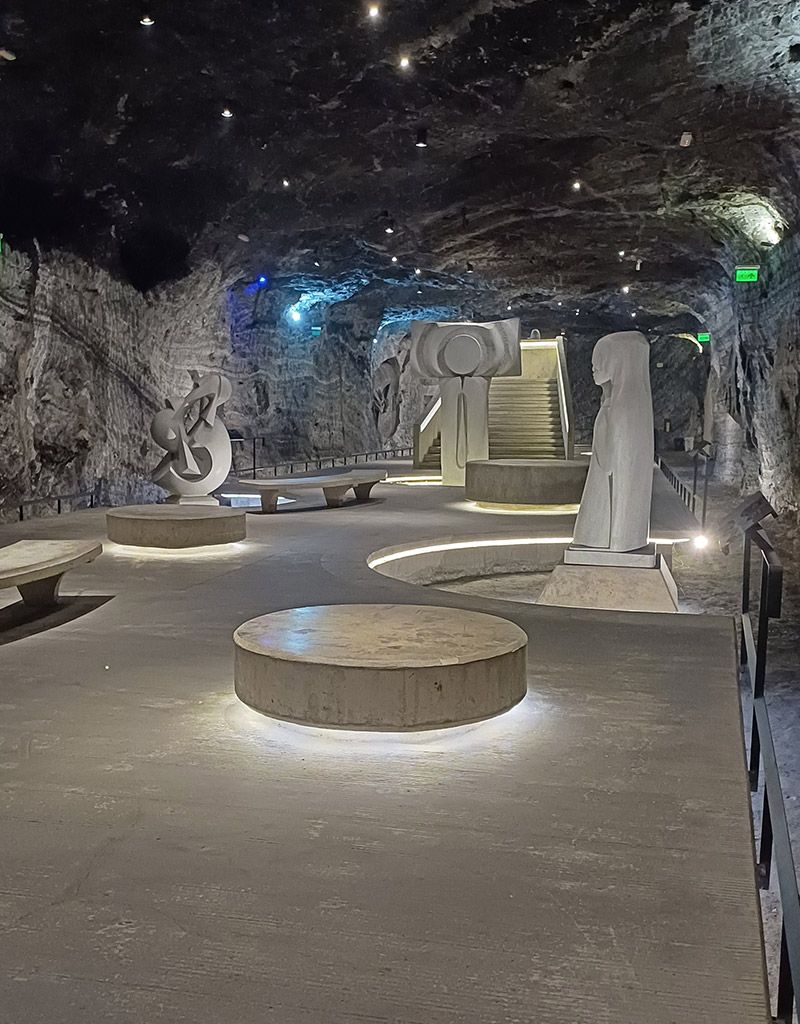
A must-do activity is to visit its museums, such as the Tutankhamun Museum, the Emerald Mine Museum, and the Monumental 180 Museum. I recommend visiting each of these museums, especially the Monumental 180, as it features salt sculptures made by world-class artists, something truly beautiful and surprising that will make you think and reflect on its meaning.
Other interesting activities include: The Miner’s Route, with an additional cost of $15,000 COP, where you can experience working as a miner while exploring tunnels, you can chip salt rock, extract salt, and take it home. The Short Film Nucuma: which tells the story of the formation of the salt dome and the methods of salt exploitation that led to the construction of this first wonder of Colombia.
Continuation of the tour, Exit from the salt mine
After enjoying some of the activities deep in the mine for about 2 hours, it was time to leave. At the beginning of the tour, between one station and another of the Via Crucis, I had mentioned the steep stairs. Well, there it was, at the bottom, wondering if I would get too tired climbing. Despite being steep, they were smooth to ascend, although I cannot deny that I arrived at the top a bit out of breath.
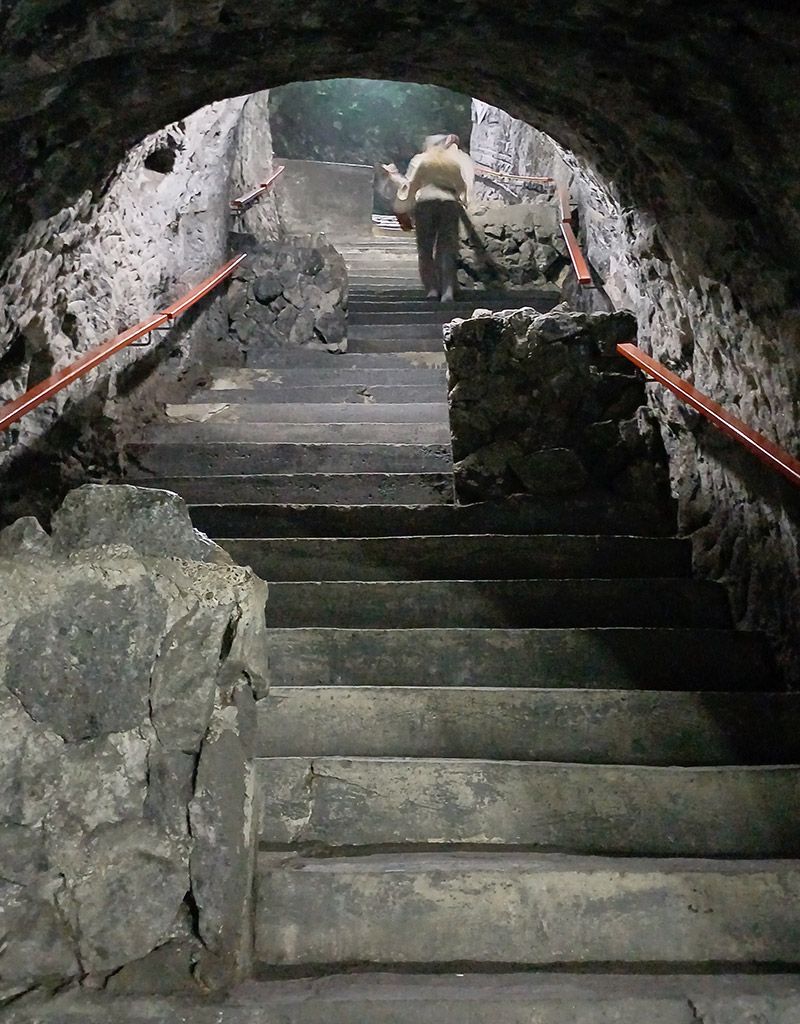
After climbing the stairs, I arrived back at the stations of the Via Crucis and continued up to the place where the ceiling was covered with that white material and salty water drops were falling. I tried several times to get at least one drop to fall on me, but unfortunately, I did not succeed.
Finally, I exited the salt mine. I had quite a contradictory feeling upon exiting, between the pleasant sensation of returning to the outside with the sunlight back and the strange nostalgia of missing such an imposing and unique place in the world, nearly two hundred meters deep.
Returning to Bogotá from Zipaquirá
How to get from Zipaquirá to Bogotá by public transport
From the entrance to Parque de la Sal, I walked all the way back to Parque La Esperanza, passing through the central square. Once there, I waited for a bus that indicated the route to Bogotá. I only had to wait about 10 minutes until I got the transport; I told the driver's assistant that I needed to get off near the TransMilenio Estación Terminal Norte station in Bogotá. The bus fare from Zipaquirá to Bogotá was $10,500 COP, the same as on the way there.
Once near the TransMilenio station, I was told to get off. We were at the entrance of the northern highway of Bogotá. From there, I walked to the station and finally boarded the bus route that took me back to the hotel.
Minimum budget for your visit to the Salt Cathedral of Zipaquirá from Bogotá
Expense | Estimated Budget | Detail |
|---|---|---|
Transport | $25,000 - $30,000 COP | Intermunicipal bus transport round trip Bogotá-Zipaquirá-Bogotá. |
Food | $45,000 - $50,000 COP | Breakfast, lunch, and snack. |
Entrance to the Salt Cathedral of Zipaquirá | From $75,000 COP | Basic Entrance |
Total per person | $145,000 COP | As a minimum for your trip to the Salt Cathedral of Zipaquirá. |
In conclusion
To summarize, the Salt Cathedral of Zipaquirá is a unique and unforgettable experience. Its architectural beauty, cultural significance, and unique location make it a must-visit tourist destination. If you are planning a trip in Colombia, be sure to include the Salt Cathedral in your itinerary. To buy tickets to the Salt Cathedral of Zipaquirá, you can visit the authorized online ticket sales platform exploreti.com. Don't miss the opportunity to discover this underground wonder!
Keep exploring
Related articles

Guide 2026: What to do in Cartagena de Indias? (Itineraries, Prices, and Safety)
<p>Discover here a complete guide to Cartagena in 2026, what to do, prices, and what to avoid in the city.</p>
Guide 2026: How much is a tour to Nevado del Ruiz and how to book it safely?
<p>Guide to tours to Nevado del Ruiz for 2026, dare to discover one of the best landscapes in the country.</p>

Tour in Guatapé: an unforgettable adventure
<p>Guatapé, located in the heart of Colombia, is a unique tourist destination that offers a wide range of exciting experiences for visitors.</p>